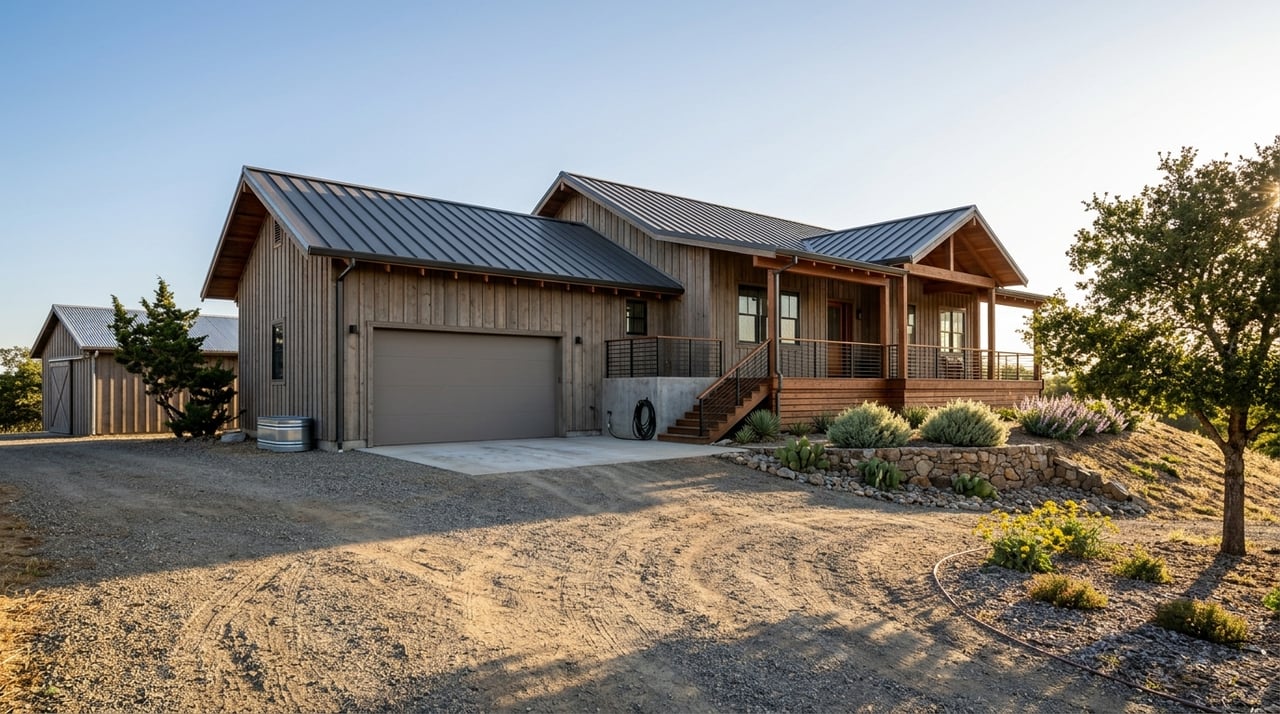
What It’s Like To Own Land In Lebec
June 4, 2026
June 4, 2026
If you are thinking about buying land in Lebec, it helps to reset your expectations right away. This is not suburban living with a bigger yard. It is a more rural, hands-on ownership experience where space is the upside, and planning ahead becomes part of daily life. In this guide, you will get a practical look at what owning land in Lebec really feels like, from weather and road closures to water, septic, and carrying costs. Let’s dive in.
Lebec is an unincorporated community in southern Kern County at Tejon Pass. That location shapes almost everything about land ownership there. Instead of a dense residential setting, you are buying into a mountain-pass area tied closely to Interstate 5 and the realities of rural infrastructure.
The best way to think about it is this: you are not buying a typical lot with extra elbow room. You are buying a small rural property with a transportation-corridor address. That can mean more flexibility and open space, but it also means convenience is usually not the main feature.
In Lebec, errands and routines tend to revolve around driving, watching conditions, and planning ahead. That is a natural result of the area’s layout, service pattern, and road-dependent setting. Even simple tasks can take more forethought than they would in a typical suburban neighborhood.
For many owners, that tradeoff is worth it. You may gain room for storage, outdoor use, hobby space, or simply more privacy. But you should go in knowing that the lifestyle usually asks more from you each week.
Lebec does have some useful local services. USPS lists a Lebec Post Office, though that location does not offer financial services or passport services. There is also the Frazier Mountain Community Health Center on Lebec Road, which provides primary care, behavioral health, lab services, and after-hours phone access for non-life-threatening advice.
Waste disposal is also more hands-on than many buyers expect. Kern County’s Lebec Transfer Station gives local owners a place to self-haul household trash, green waste, tires, used motor oil, and bulky materials. If you own acreage, that can matter because land often creates more yard debris and maintenance waste than a standard tract home.
Public transit exists, but it is limited. Kern Transit Route 130 serves the Frazier Park, Lebec, and Bakersfield corridor Monday through Saturday, and current service alerts note that the Santa Clarita stops are suspended until further notice. For most people, a car is not optional in day-to-day life here.
One of the biggest differences in Lebec is how much weather affects routine decisions. Nearby Frazier Park climate data, which is a practical proxy for Lebec’s mountain communities, shows January averages around 30.4°F for lows and 52.1°F for highs. In July, averages are about 53.6°F for lows and 88.2°F for highs.
Annual precipitation is about 13.83 inches, and frost commonly stretches from early November into late April. That means winter preparedness is not just a nice idea. It is part of normal ownership planning.
The major issue is not only cold temperatures. It is what winter weather can do to roads. Caltrans says the Grapevine and Tejon Pass segment of I-5 closes for snow and ice an average of 3 to 5 times between October and April, and some closures last more than 24 hours.
Road conditions can also change quickly. Caltrans and CHP treat those conditions as a safety issue, which means closures are based on what is happening on the ground, not on convenience for travelers. If you own land in Lebec, it is smart to assume that a mountain storm can change a normal day into a stay-put day.
Owning land here often means building weather prep into your routine. That can include:
If you are used to more predictable suburban conditions, this is one of the biggest lifestyle shifts to understand before you buy.
When you buy raw or lightly improved land in Lebec, the biggest questions are often not cosmetic. They are about water, wastewater, and whether the parcel can support what you want to do. These issues should be screened early, not after you fall in love with the property.
Kern County Environmental Health standards say individual onsite wastewater systems, including septic systems, require soils and percolation review and must be installed under permit. The county’s well rules also require new wells to be site-verified before approval.
If a parcel is expected to use both a private domestic well and an individual septic system, Kern County standards call for at least 2.5 gross acres, with only a narrow engineering-based exception possible. For buyers, that is not a small detail. It can be a major yes-or-no screening issue.
That means land shopping in Lebec should include more technical due diligence than shopping for a typical residential lot. Access, soils, water source, wastewater setup, and permit path all matter early in the process.
Some parcels are served by Lebec County Water District rather than a private well. The district’s August 1, 2025 rate sheet shows a 3/4-inch meter base charge of $63.70 per month and a usage rate of $0.042 per cubic foot, with later annual inflation increases built into the schedule.
It is also helpful to understand the broader water context. The Castac Basin Groundwater Sustainability Agency includes Lebec County Water District, Tejon-Castac Water District, and Kern County. That is a reminder that water here is managed as part of a shared basin system, not as an unlimited city-style utility.
Acreage can create possibilities, but it does not guarantee them. If you are hoping for horses, outbuildings, or other rural uses, you still need to confirm what the parcel’s zoning and any applicable land use rules allow.
Kern County defines livestock to include horses, and horse-related or livestock-related uses appear in several zoning districts, including Estate, Agriculture, and Recreation-Forestry. In some cases, those uses may involve conditional-use review.
This is one of the most common mistakes buyers make with rural property. A parcel may look perfect for corrals, barns, or hobby use, but appearance alone does not answer the zoning question. Before moving forward, you should verify what is allowed on that specific parcel.
That extra step can save you time, money, and frustration. It is especially important if your vision for the property goes beyond simply holding land or building a standard residence.
Wildfire is a standing ownership issue in this part of Kern County. CAL FIRE says Fire Hazard Severity Zone maps classify hazard as moderate, high, or very high. Kern County Fire also notes that updated local-responsibility-area maps are available for public review.
Just as important, CAL FIRE states that these maps measure hazard, not risk. In practical terms, that means parcel-level review still matters. Two properties in the same broader area may not have the same site conditions, access features, or vegetation patterns.
For landowners, wildfire preparation is part of the cost and responsibility of owning property in this setting. It is not something to treat as an afterthought.
Many buyers look at vacant land or rural acreage and focus first on price and taxes. Those numbers matter, but they do not tell the whole story. The ongoing cost of ownership in Lebec is often broader than people expect.
California property taxes under Proposition 13 generally start with a base tax rate of 1% of assessed value plus bonded indebtedness, and assessed value increases are generally limited to 2% per year unless a reassessment trigger occurs. That helps frame the tax side, but the practical ownership budget often includes much more.
Depending on the parcel, owners may need to budget for:
This is one reason owning land in Lebec can feel rewarding and demanding at the same time. You may get the freedom and space you want, but you also take on more direct responsibility for the property’s condition and function.
Lebec can be a strong fit if you value space, independence, and a more rural pace. Buyers who do well here usually understand that the property itself is only part of the equation. Access, weather, utility setup, and ongoing maintenance are all part of the lifestyle.
If you are looking for easy errands, dense service options, and minimal property oversight, Lebec may feel like a tougher adjustment. But if you want room for a different kind of lifestyle and you are ready for the planning that comes with it, the area can offer something hard to find closer to more suburban markets.
Owning land in Lebec is really a tradeoff. You are often exchanging suburban convenience for open space, flexibility, and a more self-directed way of living. For the right buyer, that trade can make a lot of sense.
The key is to go in with clear eyes. Weather, road closures, water and septic planning, zoning, wildfire awareness, and ongoing upkeep are not side notes here. They are part of everyday ownership. If you want help evaluating acreage, rural homes, or lifestyle properties near Santa Clarita and surrounding markets, Dan Regan can help you make a more informed move.
Stay up to date on the latest real estate trends.
October 22, 2026
October 15, 2026
October 8, 2026
October 1, 2026
September 24, 2026
September 17, 2026
September 10, 2026
September 3, 2026
August 27, 2026
I’m grateful to be part of over 450 transactions in my career and the wealth of knowledge it has brought me, and I can’t wait to meet you! Contact me today to start your home searching journey!
LET'S CONNECT
DAN REGAN | CA DRE# 01915384
25129 The Old Road Suite 114 Santa Clarita CA 91381